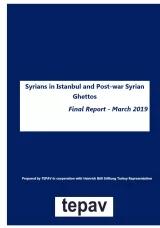
The present research was undertaken to address the need for comprehensive data on the social integration or cohesion of migrants in Turkey. It discusses the findings of the quantitative and qualitative research in detail in subsequent sections.
The EU has hosted a Donors’ Conference for the victims of the Kahramanmaraş earthquakes on 20 March. Check out our new factsheet by Onur Bahçecik to learn more about the background of the high-level conference. What do international donations cover? Through which mechanisms are they distributed? And how are they monitored?
In this report, Tolga Demiryol analyses Turkey’s role as a potential hydrogen supplier to Europe. The first section of the report provides the state-of-the-art on hydrogen and its likely role in energy transition. The second section explores the hydrogen strategy of the EU. The third section reviews the current state and potential of the hydrogen sector in Turkey. The last section evaluates the main policy challenges and next steps in hydrogen cooperation between the EU and Turkey.
Turkey presents a powerful case where idealism and pragmatism meet. Pushing for human rights, democracy, and the rule of law not only serves Western ideals but also Western interests.
While the United States and Europe may never have warm relations with Turkey, a clear and functional relationship, built around a mutually shared understanding of the other sides’ red lines could make cooperation on issues easier to pursue.
In its new study, our project partner SÜDWIND Institute documents problems in Turkish small enterprises in the leather sector. In the summer of 2021, workers and employers who produce leather, shoes, belts or bags in Turkey were interviewed.
The results of the study are based on field visits where in-depth interviews took place with 370 individuals to verify the presence of the five basic parameters of ghettoization: i) isolated area, ii) residential segregation, iii) homogeneous relations, iv) social exclusion, and v) population density, which are present in both Fatih and Sultangazi, effectively turning certain areas within the districts into post-war ghettos.