This study aims to take stock of the progress of the last decade, as well as identify remaining barriers and new opportunities for women CSO leaders in achieving systemic change in Europe. The key findings indicate a concerning trend of burnout among women leaders in the CSO sector, hindering their efforts to drive systemic change.
The present study includes recommendations in this context and made within the framework of a parliamentary monitoring study conducted within the scope of “Recommendations for Policies to Combat Disaster and Poverty during the Economic Crisis Period and after the February 6 Earthquake” with the support of Heinrich Böll Stiftung Turkey.
The present research was undertaken to address the need for comprehensive data on the social integration or cohesion of migrants in Turkey. It discusses the findings of the quantitative and qualitative research in detail in subsequent sections.
The report aims to identify young people's voting strategies, their relationship with institutional politics, their views on the qualifications of presidential candidates and their views on Turkey’s problems, before the elections, which are an important turning point for democratization.
With the support of the Heinrich Böll Stiftung Association, the Açık Alan Derneği, which carries out studies on poverty, published a monitoring report on the poverty agenda in the media covering the months of January-August 2022.
This handbook is prepared with Change Agent teachers within the framework of our project titled “Empowering teachers with critical digital literacy skills” realised in collaboration by Teyit and Teacher’s Network.
This research report was prepared by the KONDA Research and Consultancy Inc. for the Turkey Representative of the Heinrich Böll Stiftung Association. It aims to understand the domestic work, home care, working practices and time use of the Turkish population aged 18 and over during the Coronavirus Pandemic, and to examine differences before the pandemic and in different periods of the pandemic.
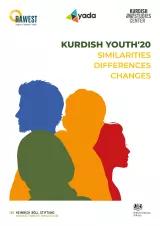
On the basis of empirical data collected in 11 cities, the report aims at contributing to a better understanding of the values and attitudes of Kurds over the age of 18 years, and to present similarities and differences both among themselves and between them and the Turkish society.
The report Naming Violence: Women's Religious Belongings and Their Ways to Survive Violence, produced by Havle Women's Association with the contribution of Heinrich Böll Stiftung Turkey, has been published.
The report of the research "Kurdish Youth'20: Similarities, Differences and Changes" conducted by Kurdish Studies Center and Yaşama Dair Vakıf is published.
This book consists of 130 brief biographies about people who have shaped contemporary politics in Turkey and influenced how Turkish politics have unfolded in recent times.
The biographic portayals of each individual are based nut just on facts but analytical explorations of general context of the periods in questions as well as the relationships that existed between particular incidents and persons.
Cuma Çiçek from Mardin Artuklu University and Vahap Coşkun from Dicle University co-wrote a report for the Peace Foundation: "The Resolution Process From Dolmabahçe to Today: Comprehending the Failure and Finding a New Path".
The feature articles of this first issue deal with the historical background and recent developments concerning the “deep state” of Turkey. We regard the “deep state” as one of the important impediments in the democratization of this country. With the different reforms that led to a change in the civil-military relationship, with the law suits such as the Ergenekon trial, and with the trial against responsible personality of the coup d’état in 1980, it became a much discussed topic; if the AKP government attempts to destroy the deep state; if it is accommodating to it or just changing the actors of the “deep state”. In our first issue, we try to give answer to these questions. In addition to the feature articles, topical articles on issues such as the reform of the educational system, censorship in the arts as well as the renewable energy law and the reform of the health system are addressed.